Compare
Sumo afternoon or Shinjuku bar crawl?
Two ways to meet everyday Tokyo: a sumo session on a Kōtō shopping street or a guided bar and izakaya crawl in Shinjuku. Ages, food, pace and who each suits.
Reserve a place by the ring ↗Quick answer
Pick the Sunamachi sumo session if you are travelling with children, want to watch and even try sumo, and like the idea of a residential shopping street in east Tokyo. Pick the Shinjuku bar and izakaya crawl if you are adults after an evening of small bars, sake and karaoke in the alleys around Shinjuku Station. One runs about ninety minutes and welcomes four-year-olds; the other runs about three hours and is closed to anyone under twenty.
The two side by side
| Sumo session | Bar crawl | |
|---|---|---|
| Length | About 1.5 hours | About 3 hours |
| Where | Sunamachi Ginza, Kōtō | Shinjuku alleys |
| Food and drink | Buy on the street | Pay as you go |
| Ages | From four | 20 and over |
| Language | English, Japanese | English |
The short answer
These two bookings answer the same wish, to see a side of Tokyo that residents use, in very different ways. The sumo session on Sunamachi Ginza is a family outing built around a sport: you learn how sumo works, watch two former professionals train and wrestle, and can step onto the ring yourself. The Shinjuku crawl is an adult night out built around drinking: a local guide takes a small group through three areas of tiny bars and izakaya and ends with karaoke. If anyone in your party is under twenty, the choice is already made. If not, it comes down to whether you want a contest to watch or a round of bars to sit in.
What each one is
The sumo session lasts about ninety minutes in a small venue in Kōtō ward. A host explains the sport in English and Japanese, two retired professional wrestlers train and then wrestle real bouts, and anyone who wants a turn changes into a mawashi to take one of them on. The crawl lasts about three hours and starts in Omoide Yokocho, an alley of small izakaya hung with red lanterns, before moving on to Kabukichō and then Golden Gai. Along the way you try local beer, spirits and sake, and the last stop is a bar where you can sing karaoke. The guide may vary the bars on a given night.
Where you will be
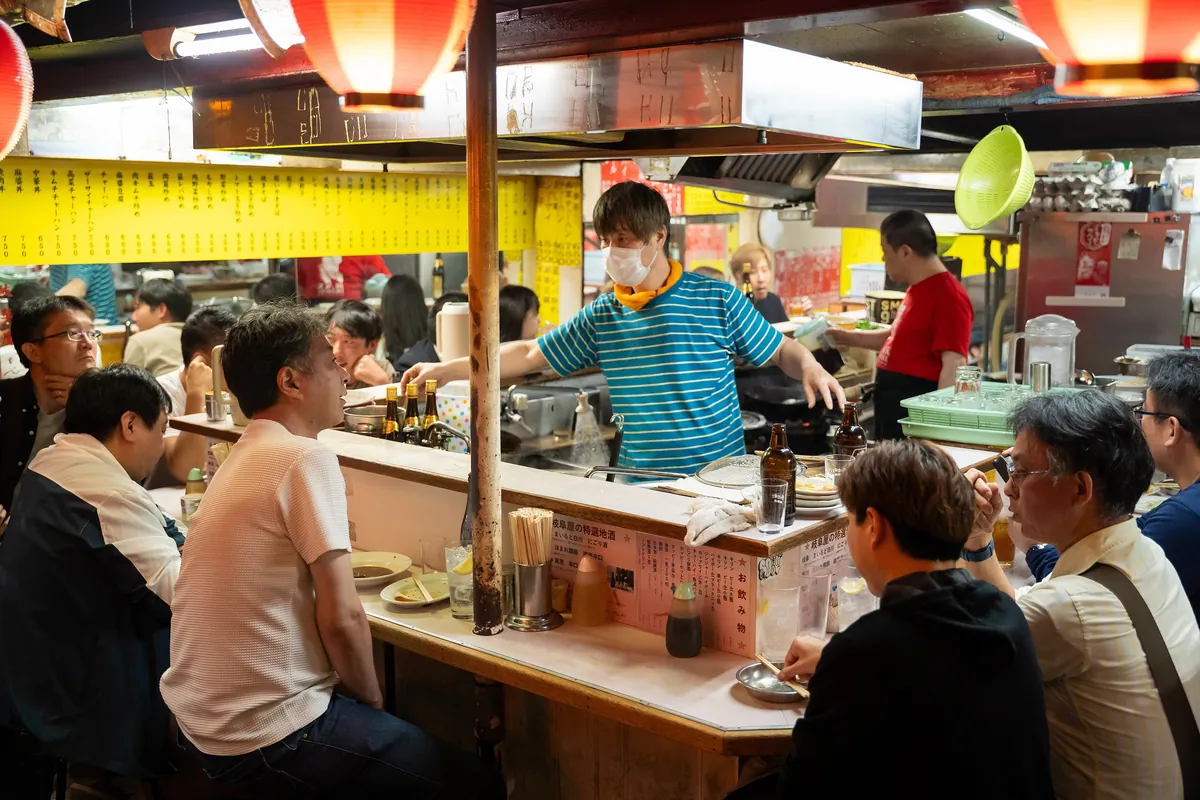
The settings could hardly differ more. Sunamachi Ginza is a shōtengai, the Japanese neighbourhood market street lined with small specialist shops, in the low-lying east of the city that Tokyo calls shitamachi. Japanese Wikipedia describes it as a street that still carries the atmosphere of the Shōwa era. The crawl spends its evening in central Shinjuku. Golden Gai, its last district before the karaoke bar, is a network of six narrow alleys packed with more than 200 tiny bars, some with room for only about five customers. Note that its alleys are private roads, and photographing or filming there without permission from the local business association is prohibited.
Food and drink, and how you pay
Neither booking includes a meal. At Sunamachi you buy whatever you like from the shops and stalls on the street before the session and carry it in to eat by the ring, so the food bill is as large or small as you choose. On the crawl, food and drinks are paid for as you go, and you are asked to bring cash. An izakaya, as English Wikipedia puts it, is an informal Japanese bar serving drinks and snacks, usually dishes meant for sharing, so the eating happens in small rounds across the night. Anyone with a tight budget will find the sumo afternoon easier to control.
Ages and who can come
This is the deciding line for families. The sumo session welcomes children aged four and over, who can join the ring challenge too, and under-fours go free. Women and girls can step onto the ring, which professional sumo does not allow. The Shinjuku crawl is not suitable for anyone under twenty, so it is an adults-only booking, and every stop is a bar or an izakaya. If even one person in your party is younger, the sumo afternoon is the one that works for everyone.
How much you take part
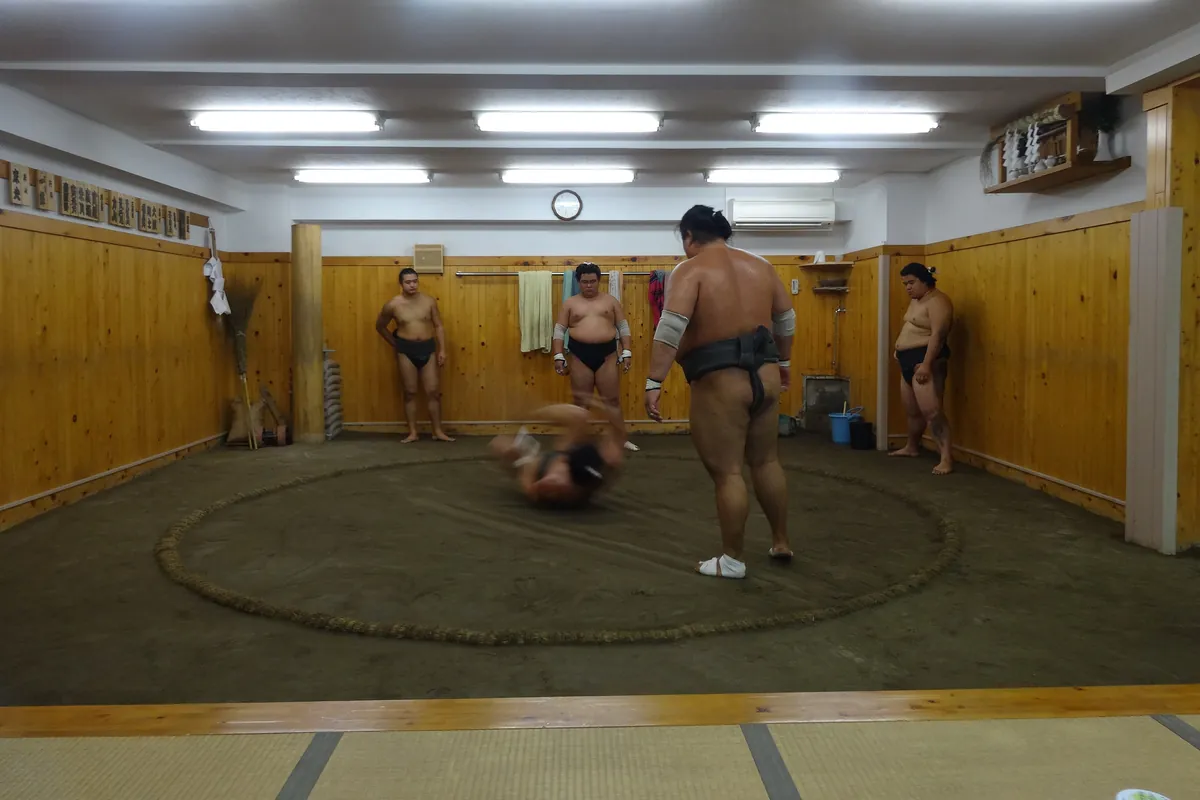
Both are participatory, in different ways. At Sunamachi you watch for an hour and then, if you like, change into a mawashi and push against a man who trained in professional stables; everyone can step onto the ring for photos at the end. On the crawl you are a guest at a row of bar counters, ordering, tasting and chatting with your group and the people beside you, and the night ends with your own turn at the karaoke microphone. Shy travellers may find the sumo challenge easier, since it is optional and over quickly.
Time and pace
The sumo session is the shorter commitment at about ninety minutes, plus the time you spend shopping on the street first and the ride out to Kōtō. It runs most days of the year, with times listed in the calendar. The crawl takes about three hours and is an evening plan by nature. Each refunds in full if you cancel 24 hours out or more, and neither needs paying for on the day you reserve, so you can decide late.
Getting there and back
Shinjuku is the easier destination: the crawl meets at Omoide Yokocho in Shinjuku, and you are in the middle of the city when it ends. Sunamachi Ginza is out east. Take the Tōzai line to Minami-Sunamachi Station or the Toei Shinjuku line to Nishi-Ōjima Station, then walk, as neither station sits on the street. Buses stop on the street itself at Kitasuna 2-chōme, and a taxi from either station is quick. The Toei Shinjuku line, whose western end is at Shinjuku, also serves Nishi-Ōjima, so it ties the two halves of a long day together.
Read next: Sunamachi Ginza: street and stations
Doing both in one day
Adults with the energy can pair them. Book an early sumo session, eat on Sunamachi Ginza, then cross the city for an evening crawl in Shinjuku. The sumo half gives you the sport and a neighbourhood market street; the Shinjuku half gives you the bar culture of the alleys. It makes a full day, so keep the morning light. Families with children can swap the crawl for an early walk through Asakusa and Sensō-ji, Tokyo's oldest temple, which is a card on this site too.
Three quick verdicts
Parents travelling with anyone under twenty: book the sumo afternoon, since the crawl is closed to them and the ring challenge is open to children from four. Couples and friends who want a night out with drinks and a little singing: book the crawl, and keep the sumo for another trip or a tournament month. Adults curious about both sumo and Tokyo's bar alleys, with a free day and good legs: take an early sumo session, eat on Sunamachi Ginza, rest, then meet the crawl in Shinjuku in the evening.
Who this isn't for
Skip the sumo session if you are after a grand tournament or want dinner included, and the walk from the trains will try a group in a hurry. The crawl is not for anyone under twenty, anyone who does not drink alcohol or anyone who wants a quiet evening; its bars are small by nature, and in Golden Gai many upper-floor bars are reached by steep stairs. Each does a different job, and neither replaces a sit-down dinner.
Frequently asked questions
Which is better for families?
The sumo session. Children from four can take part, ring challenge included, and under-fours go free. The Shinjuku crawl is not suitable for anyone under twenty.
Which is cheaper overall?
Prices change, so check the booking pages. On the sumo afternoon you control the food bill yourself; on the crawl, food and drinks are paid as you go on top of the ticket.
Can one day hold both?
Yes, if you are adults with stamina. Take an early sumo session in Kōtō, eat on Sunamachi Ginza, then head to Shinjuku for an evening crawl.
Do I need cash?
Bring cash for the Shinjuku crawl, where food and drinks are paid as you go. For the sumo session, bring what you need to buy food on the street beforehand.
Which one is in English?
Both. The sumo host speaks English and Japanese; the crawl is led by an English-speaking local guide.
Sources
- Sunamachi Ginza shopping street: Japanese-language Wikipedia entry, as read in November 2026
- Shōtengai: English-language Wikipedia entry, as read in November 2026
- Izakaya: English-language Wikipedia entry, as read in November 2026
- Shinjuku Golden Gai: English-language Wikipedia entry, as read in November 2026
- Kabukichō: English-language Wikipedia entry, as read in November 2026
- Sumo: English-language Wikipedia entry, as read in November 2026